
March 15, 2026

In the spring of 2025, with support from Prytula Foundation USA, Ukraine Rises managed the independent field evaluation of two Ukrainian-developed demining technologies in the Kharkiv Oblast — testing them not on a simulated range, but on real contaminated land. Here's what we found.
Ukraine is widely recognized as the most landmine-contaminated country in the world. It is also, by necessity, becoming one of the most innovative. Ukrainian engineers and manufacturers are developing a new generation of demining technologies — drones, ground robots, AI detection systems — designed specifically for Ukraine's conditions: dense vegetation, active electronic warfare, vast tracts of black-soil agricultural land.
The challenge is translating that innovation into tools that actually work. Most technology evaluation in humanitarian demining happens on controlled test sites with simulated threats. That's useful — but it doesn't tell you what happens when a machine meets real contaminated land, real field conditions, and real operational tempo. That gap between the test range and the field is where promising technologies stall.
In the spring of 2025, Ukraine Rises and Prytula Foundation USA set out to close that gap.
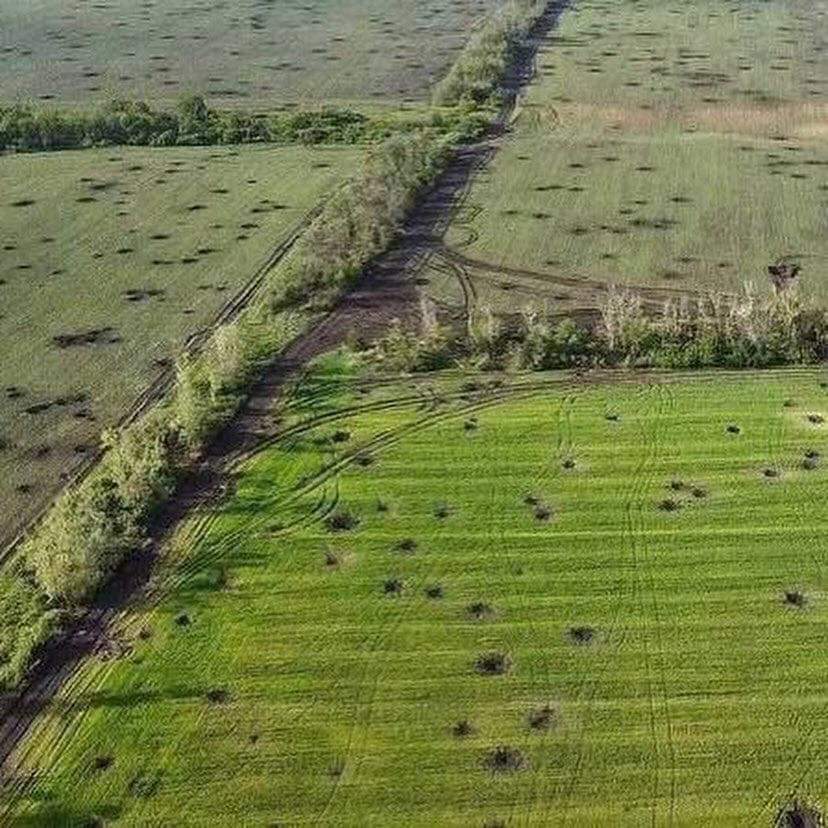
With a $225,000 grant from Prytula Foundation USA, Ukraine Rises managed the independent field evaluation of two Ukrainian-developed demining technologies in the Kharkiv Oblast — one of the most heavily contaminated regions in the country. Testing was conducted by Humanitarian Security LLC, a certified humanitarian mine action operator, across more than 193 hectares of real contaminated land in the Izium district — territory liberated from Russian occupation. All testing followed IMAS-compliant protocols and was integrated directly into live demining operations, not a simulated environment.
Two technologies were evaluated:
An AI-powered reconnaissance drone designed for mine detection and visual identification of explosive remnants of war. Our non-technical survey team deployed the drone across six survey zones totaling 161 hectares; its AI identified approximately 40% of explosive remnants autonomously — with accuracy nearly doubling over the course of testing as the system processed more real-world data. One of our biggest concerns going in was electronic warfare interference, a constant reality in the Kharkiv region. Our team's real-time feedback prompted the manufacturer to make mid-testing upgrades, extending the drone's online and operational time from about one hour per day to four to five hours per day — a concrete example of how field testing accelerates what the lab alone cannot.
A remotely operated 950kg platform designed for path-cutting and mechanical clearance. Our operators were able to get up to speed quickly, and several systems performed well:
Critically, our field tests revealed two significant challenges that likely would not have been identified through controlled lab tests alone:
While neither issue was fully resolved during the testing period, the manufacturer was engaged throughout the testing process. With targeted design improvements, our demining operators believe the ZMIY has strong potential to improve humanitarian demining safety while significantly lowering labor costs: if used to cut paths for human deminers during the Technical Survey and Manual Demining processes, the ZMIY would be taking on some of the most dangerous work so people wouldn't have to.
Neither technology is ready for mass deployment as-is — and that's exactly the point. Rigorous field testing exists to find the gap between what a technology can do in a demo and what it does under real conditions. The findings from this evaluation give Ukrainian manufacturers specific, actionable feedback. They give funders and operators an honest picture of where these tools stand and what investment is needed to get them to scale. And they help the entire demining community learn faster.
There is no shortage of demining technology being developed in Ukraine right now. What remains scarce is the kind of independent, field-grounded evaluation that turns a promising prototype into a deployable tool. That's the work Ukraine Rises is here to do — and we're looking for partners who want to do it with us.
This field evaluation was conducted in partnership with Prytula Foundation USA and Humanitarian Security LLC. Disclosure: Ukraine Rises Founder Jessica Bleyzer and Board Member Lev Bleyzer serve as uncompensated board members of Humanitarian Security LLC.



Sign up to learn how you can help Ukraine Rises and receive the latest updates on our work.


